

+918048037877

Currently it only shows your basic business info. Start adding relevant business details such as description, images and products or services to gain your customers attention by using Boost 360 android app / iOS App / web portal.

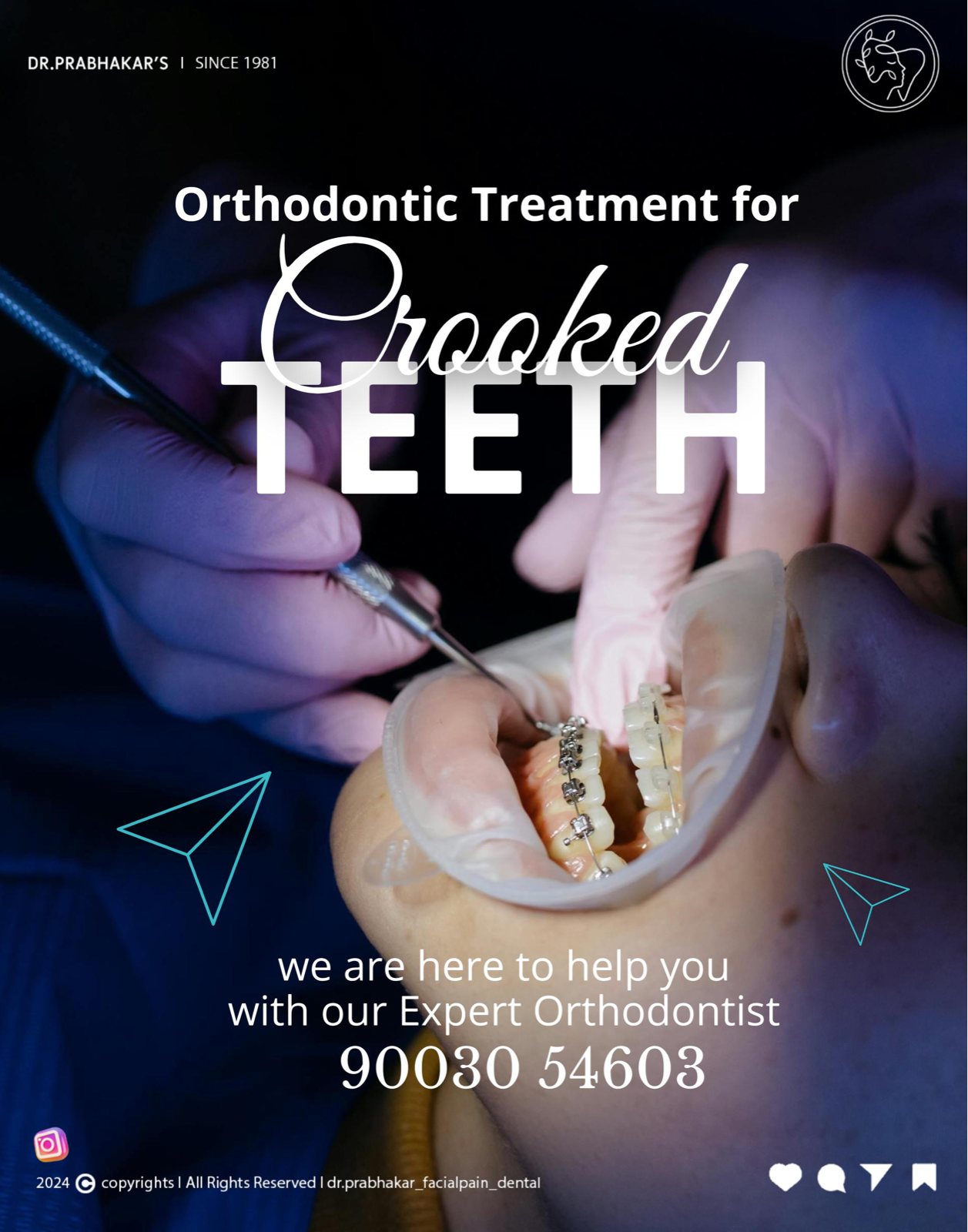
Orthodontic braces are dental devices used to straighten teeth, correct bite problems, and improve overall dental alignment. They apply gentle, continuous pressure over time to move teeth into desired positions. What braces consist of Brackets: Small squares bonded to each tooth (metal, ceramic, or plastic). Archwire: A thin wire running through the brackets that guides tooth movement. Bands: Metal rings around some teeth (not always used). Elastics (rubber bands): Sometimes used to adjust bite alignment. Ligatures: Tiny rubber bands or wires that hold the archwire in place. **What braces help fix** * Crooked or crowded teeth * Gaps between teeth * Overbite, underbite, crossbite, open bite * Jaw alignment issues **Types of braces** *Metal braces:** Most common and durable. *Ceramic braces:** Tooth-colored for a more aesthetic look. * Lingual braces:** Placed behind the teeth (hidden). *Clear aligners (e.g., Invisalign):** Removable trays that straighten teeth—technically not “braces, ” but an alternative. Here’s a clear, simple **step-by-step explanation of how braces work**: ⭐ **1. Brackets are attached to your teeth** Your orthodontist glues small brackets onto the front (or back, for lingual braces) of each tooth. These brackets act like “handles” that the wires can pull on. --- ⭐ **2. An archwire is placed through the brackets** The archwire is what actually moves your teeth. It’s pre-shaped to the ideal alignment your orthodontist wants. When the wire is attached, it *naturally tries to return to its original shape*, which gently pulls your teeth along with it. --- ⭐ **3. Gentle pressure moves teeth through the bone** Your teeth sit in sockets surrounded by bone and a ligament. Braces apply steady, controlled pressure that causes: * **Bone on one side of the tooth to dissolve** * **New bone to grow on the opposite side** This process is called **bone remodeling**, and it’s how teeth slowly shift. --- ⭐ **4. Adjustments tighten or change the wire** Every 4–8 weeks, your orthodontist: * Changes the wire to a stronger one * Tightens the wire * Adds or removes elastics * Makes small corrections Each adjustment applies new pressure to move teeth closer to their final positions. --- ⭐ **5. Additional tools guide bite correction** To fix overbites, underbites, or jaw misalignment, your orthodontist may use: * **Rubber bands (elastics)** * **Power chains** (to close gaps) * **Springs** or special appliances These help move the jaw or teeth in specific directions. --- ⭐ **6. Teeth gradually reach perfect alignment** Over months to years, the combination of wires, brackets, and elastics guides your teeth into a healthy, straight position. --- ⭐ **7. Retainers keep teeth from moving back** Once braces are removed, you must wear a **retainer**, usually at night. This prevents the teeth from shifting back to their old positions. ⭐ How long treatment takes? Usually **1–3 years**, depending on the complexity of the dental issues.


