
+918048037877

Currently it only shows your basic business info. Start adding relevant business details such as description, images and products or services to gain your customers attention by using Boost 360 android app / iOS App / web portal.

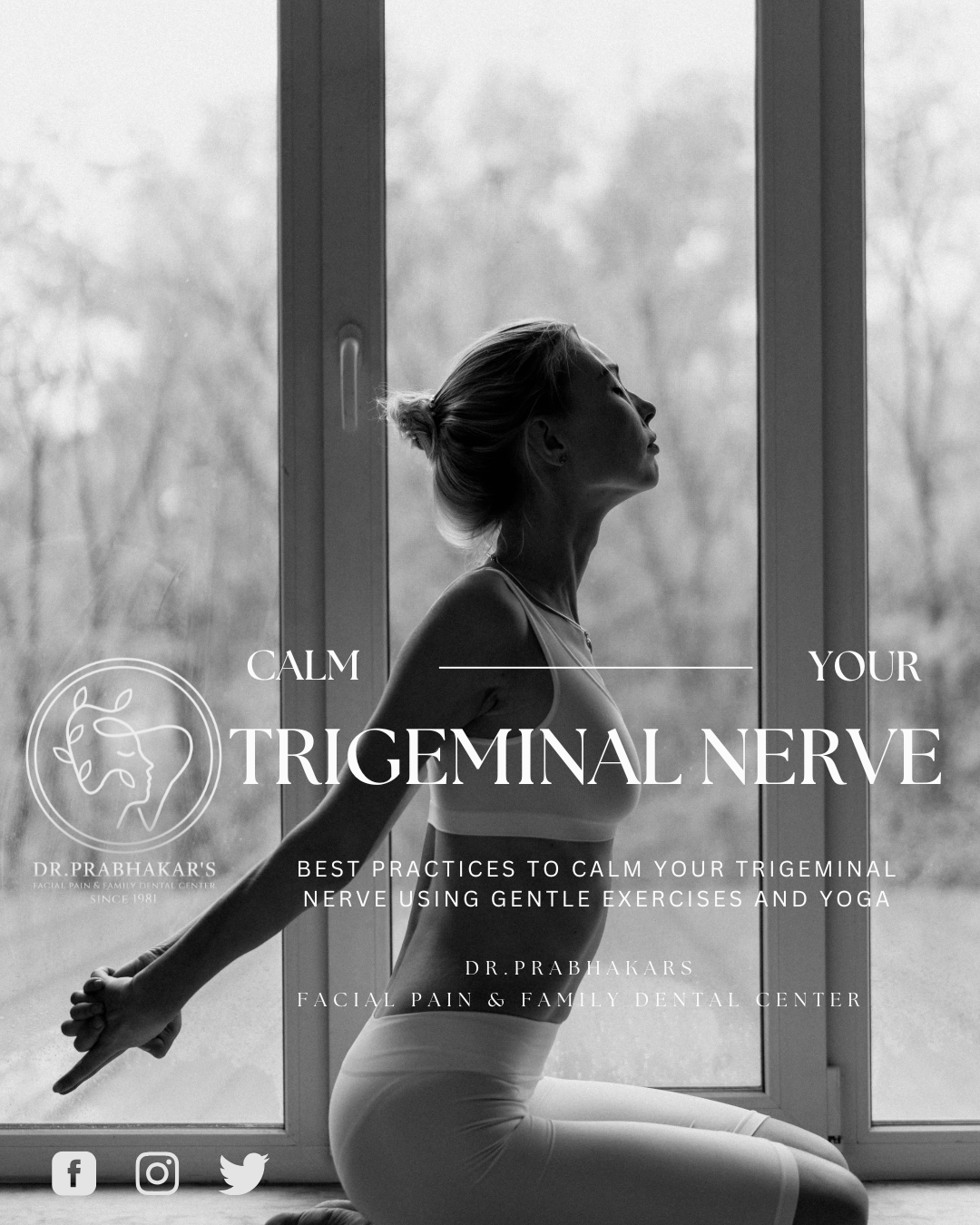
BEST PRACTICES TO CALM YOUR TRIGEMINAL NERVE USING GENTLE EXERCISES AND YOGA: Some gentle yoga practices and calming exercises could help individuals with facial pain, temporomandibular disorders, and migraines. Facial Pain conditions include a vast variety of disabling disorders that require a consultation with a TMJ/ orofacial pain specialist or a medical professional. Remember, it is of utmost importance to consult with your healthcare provider and a trained yoga instructor prior to practicing a new yoga routine. Furthermore, if your symptoms are consistently persistent, severe, and not relieved with these exercises and practice, it is best to seek a consultation with your orofacial pain specialist or TMJ specialist. 1. Pranayama (Breath Control) Certain Yoga breath control techniques promote calmness, control over thoughts, and reduce stress, especially Anulom Vilom (Alternate Nostril Breathing). Pranayama may lessen the perception of pain. 2. Application of Moist Heat Compression over affected areas Placing a hot compress or applying moist heat with a warm towel to the affected area relaxes the muscles by increasing local blood flow, which helps relieve pain. 3. Savasana (Corpse Pose) Savasana is a restorative deep relaxation technique in hatha yoga that relieves muscular tension, encourages a sense of calmness, improves mental clarity and concentration, regulates blood pressure, enhances sleep quality, and gives a sense of peace. 4. Gentle Neck Stretches Simple, gentle neck movements while stretching slowly while taking deep breaths, can alleviate tension and improve flexibility. * Side-to-side head tilt * Bringing your head forward * Side-to-side head rotation It is important to let your shoulders relax while doing these types of neck exercises. These can help loosen these muscles, giving your face some relief. 5. Calm your TMJ * Apply cold or warm compresses to the jaw area, * Relaxation techniques to reduce jaw tension, and * Avoid excessive jaw movements that include wide yawns and gum chewing. * Understand and avoid your triggers. * Over-the-counter pain relievers may provide temporary relief. 6. Viparita Karani or Legs-up-the-Wall Pose This restorative pose encourages relaxation and aids pain management by allowing gentle blood flow towards the face and brain. 7. Balasana or Child’s Pose The child’s Pose is a gentle resting pose. It releases tension in the back, shoulders, and neck. It promotes relaxation and may provide relief from facial pain. 8. Marjaryasana-Bitilasana or Cat-Cow Pose Cat-Cow Pose increases the flexibility of the neck, shoulders, and spine. The dynamic movement involves alternating between arching the back (cat pose) and extending it (cow pose). During this stretch, the tailbone is activated, releasing tension from the neck and upper back. 9. Legs-up-the-Wall Pose (Viparita Karani): This is a restorative pose. Viparita Karani allows gentle blood flow towards the face and brain, promotes relaxation by reducing anxiety and stress, and provides pain relief from jaw aches and headaches. 10. Meditation Mindfulness meditation, a central aspect of yoga, can help one become more aware of their body and pain sensations, potentially aiding in better pain management. Remember, it is of utmost importance to consult with your healthcare provider and a trained yoga instructor prior to practicing a new yoga routine. Furthermore, if your symptoms are consistently persistent, severe, and not relieved with these exercises and practice, it is best to seek a consultation with your orofacial pain specialist or TMJ specialist.


