Physical Therapy & Exercises
What it involves:Stretching, jaw exercises, posture correction, massage, and strengthening exercises.
Pros:
Non-invasive.
Can improve jaw mobility, reduce muscle tension, and prevent recurrence.
Cons:
Requires consistency over weeks or months.
May not fully relieve severe pain or chronic spasm.
Occlusal Splints and Night Guards
What it involves:
Custom-made dental appliances that prevent teeth grinding (bruxism) and reduce stress on the jaw.
Pros: Non-invasive, Protects teeth from wear and reduces TMJ stress.
Cons: Must be worn consistently, May not address underlying muscle inflammation.
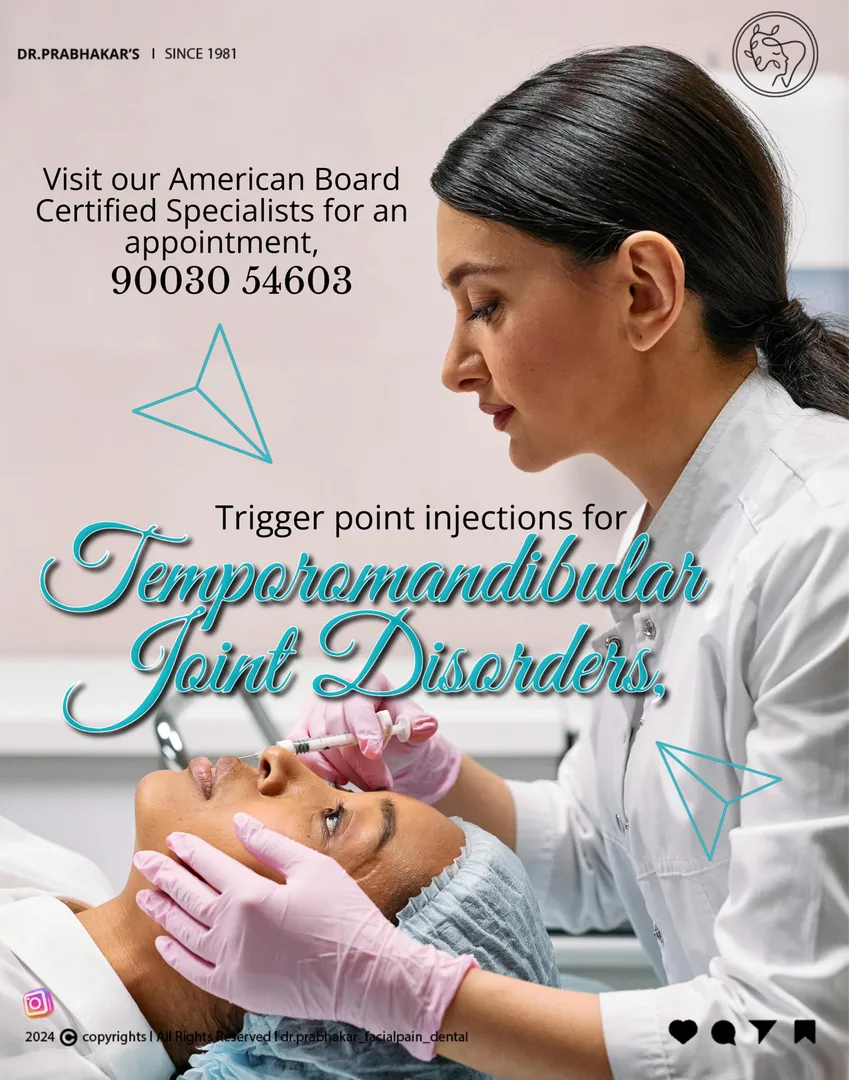
Trigger Point Injections:
What it involves:
Needles inserted into trigger points in jaw muscles to reduce tension with local anaesthetic.
Pros: Can improve blood flow and reduce chronic pain.
Cons:Multiple sessions needed.
Results vary by patient.
Low-Level Laser Therapy (LLLT)
What it involves:
Using laser light to reduce inflammation and pain in jaw muscles and joints.
Pros: Non-invasive, painless, Can accelerate healing and reduce muscle spasm.
Cons: need more session, may not be effective.
Arthrocentesis & TMJ Injections
What it involves:
Flushing the joint with saline or injecting corticosteroids to reduce inflammation.
Pros:
Minimally invasive.
Can relieve pain and improve joint movement.
Cons:
Some risk of infection or nerve injury.
Effects may wear off over time.
Surgery (Last Resort)
Options:
Arthroscopy (minimally invasive)
Open joint surgery for severe structural issues
Pros:Corrects underlying joint problems.
Cons:Invasive, costly, longer recovery, and potential complications.
Keywords